
Traditions · Guinea-Bissau · 5 min read
Carnival in Bissau: Masks of Many Islands
Story · 5 min read
Spoken reading of this record. Original community recordings are released only with the knowledge holders' consent.
The Story
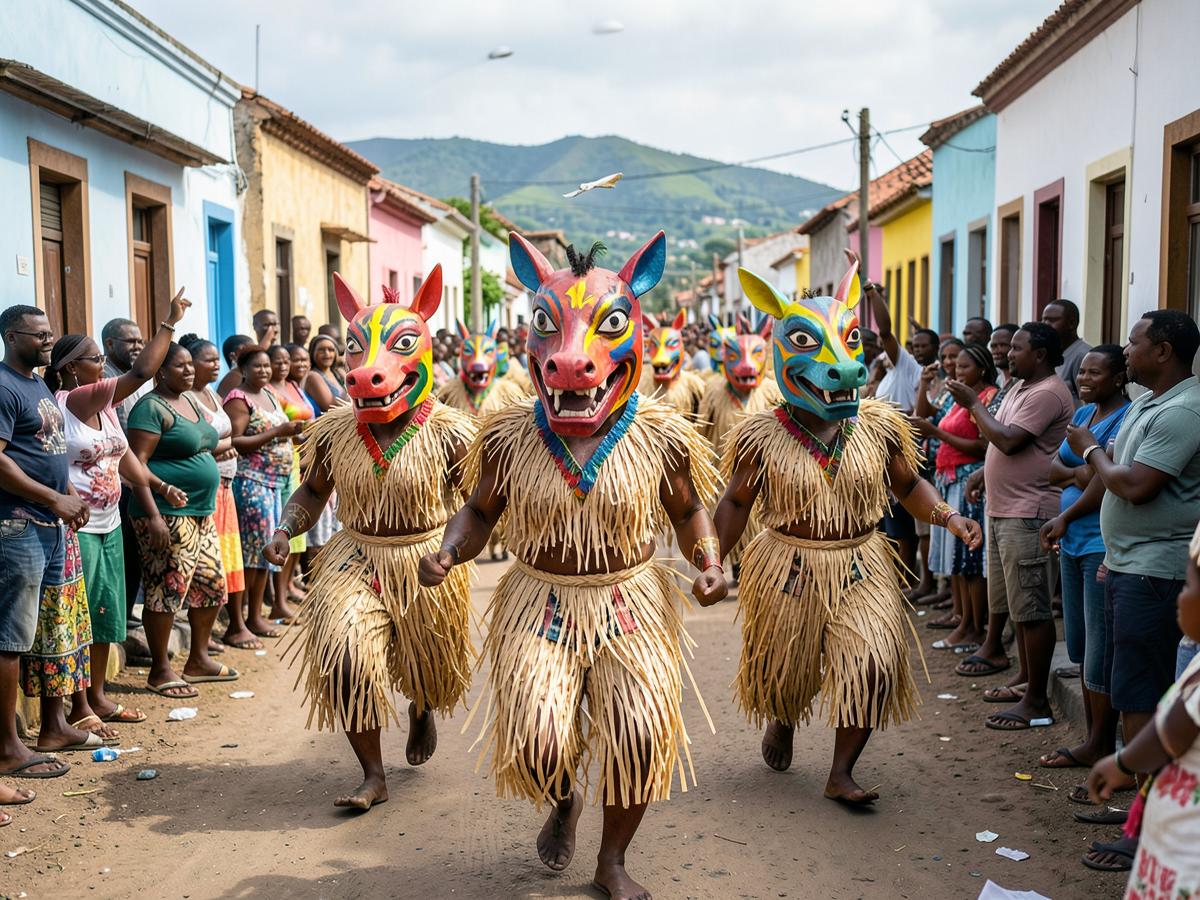
Carnival in Guinea-Bissau is held before Lent, but it is not a borrowed European festival with African decoration. Each neighbourhood of Bissau and each participating region arrives with masks and dances that come from its own tradition, and the streets become a place where those traditions meet.
Groups prepare for months. Costumes are built from wood, raffia, cloth, horns, shells and paint, and the largest masks require several people to move.
The Bijagós presence
Among the most recognised are the masks from the Bijagós Islands, carved as bulls, sharks, hippopotamuses and swordfish. On the islands these forms belong to age-grade and initiation practices rather than to carnival, and the dancers who wear them carry that training with them.
Other groups bring satire: figures dressed as officials, traders or foreigners, commenting on the year that has passed.
A national gathering
Because Guinea-Bissau's population is spread across many language groups and dozens of islands, carnival is one of the few moments when so many of those traditions appear side by side in the capital. Prizes are awarded, but the competition is largely a matter of neighbourhood pride.
What we are recording next
Our Guinea-Bissau collection begins with carvers and group leaders: who makes the masks, what each form means at home, and how island practice differs from what appears on the streets of Bissau.
Editorial note
Editorial note: this record is written from public heritage documentation rather than from a single recorded interview. Practices, meanings and names vary between communities, so descriptions here are held as one telling among many. Knowledge holders from this community are invited to correct, expand or replace this entry.
Cultural Context
Island mask forms are connected to initiation practice; their restricted meanings are not published here.
Contributor: Her African Culture editorial team, from Bissau-Guinean cultural documentation and published research.
Associated place: Bissau, Guinea-Bissau
Language: Kriol, Portuguese · Consent: Granted · Verification: Human verified