
Folklore · Nigeria · 6 min read
Ifá: The Memory of 256 Paths
Story · 6 min read
Spoken reading of this record. Original community recordings are released only with the knowledge holders' consent.
The Story
Ifá is often described as divination, but the people who practise it describe it first as a library. Its contents are 256 odù — chapters — and each odù carries verses, proverbs, histories, plant knowledge and moral cases.
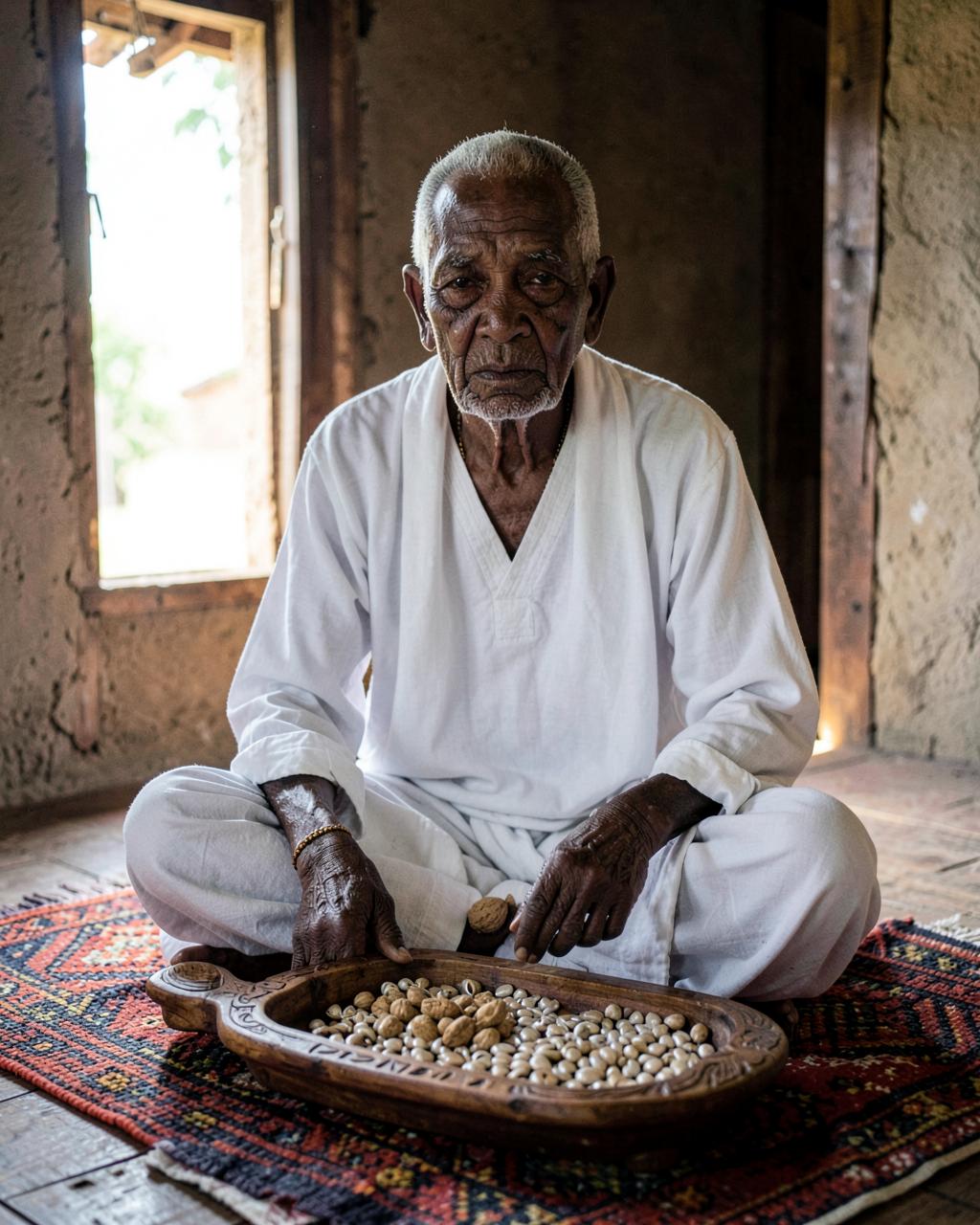
The babaláwo, the practitioner, memorises these verses over many years. There is no book to consult in the moment. The chain, the palm nuts and the divining tray are tools for arriving at the right chapter; the chapter itself lives in the mind.
How a consultation moves
A person comes with a question they do not have to speak aloud. The babaláwo casts the ọ̀pẹ̀lẹ̀ chain, reads the pattern that falls, and recites from the odù that pattern indicates. The verses are not instructions. They are stories about people who once faced something similar and what followed.
The person listens for the part of the story that belongs to them. Interpretation is shared work between the practitioner and the person who came.
Language kept alive
Ifá verse preserves older forms of Yoruba, including words and constructions rarely heard in everyday speech. Learning Ifá is therefore also a form of language study, and researchers have used its corpus to trace Yoruba history and thought.
Across an ocean
Through the transatlantic slave trade, Ifá travelled to Cuba, Brazil and beyond, where related practices continue. The Nigerian tradition remains its reference point, and practitioners still travel to Nigeria to train.
Why it is protected
UNESCO recognised Ifá as intangible cultural heritage in 2005, and it was inscribed on the Representative List in 2008. The recognition notes the pressure on the tradition from the decline of long apprenticeships.
Editorial note
Editorial note: this record is written from public heritage documentation rather than from a single recorded interview. Practices, meanings and names vary between communities, so descriptions here are held as one telling among many. Knowledge holders from this community are invited to correct, expand or replace this entry.
Cultural Context
A living knowledge system with religious meaning. Verses connected to individual consultations are private and are not reproduced here.
Contributor: Her African Culture editorial team, from UNESCO and published Yoruba scholarship.
Associated place: South-western Nigeria
Language: Yoruba, English · Consent: Granted · Verification: Human verified