
Traditions · Ghana · 6 min read
Kente: The Cloth That Is Read
Story · 6 min read
Spoken reading of this record. Original community recordings are released only with the knowledge holders' consent.
The Story
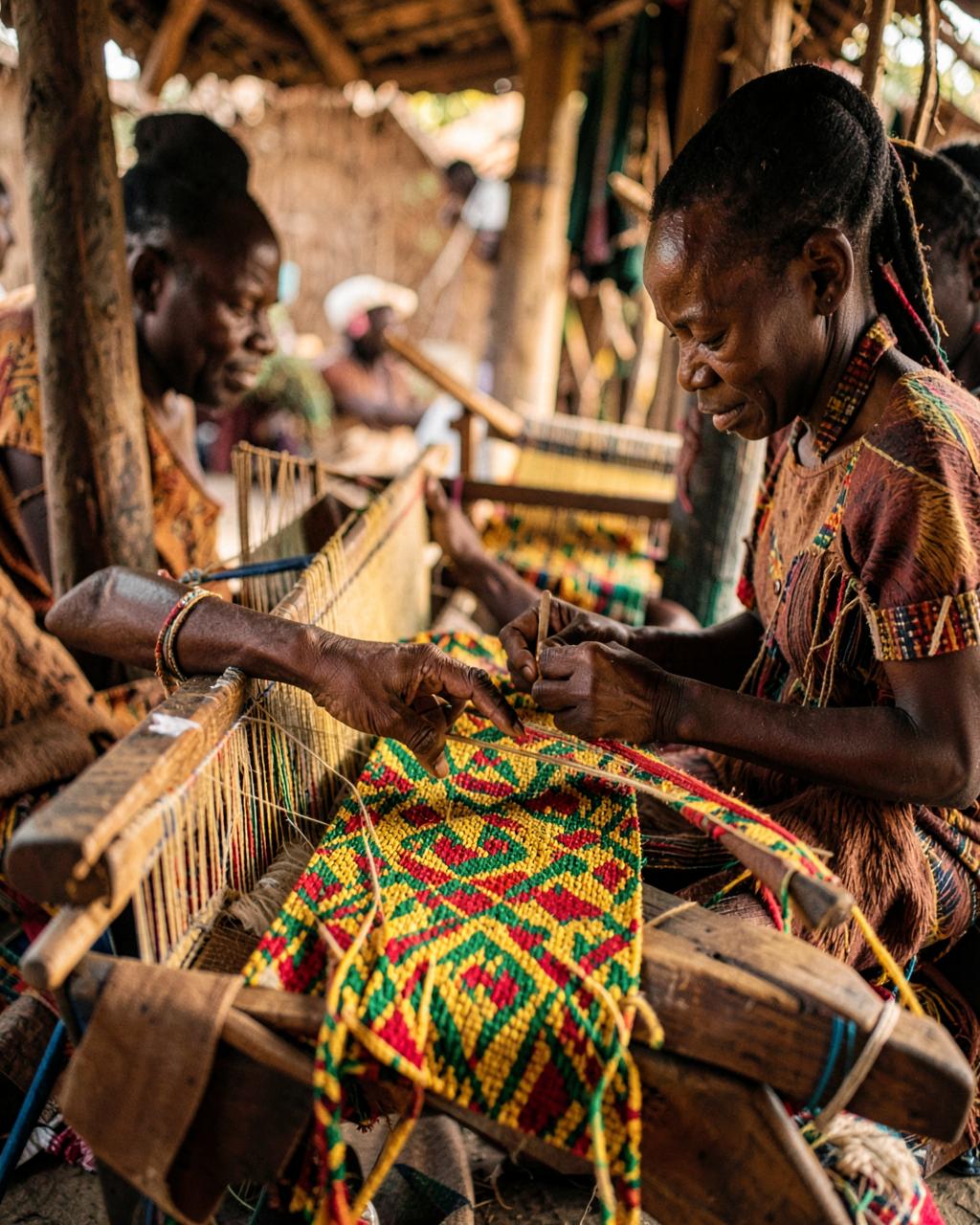
Kente is woven in narrow strips, usually about ten centimetres wide, on a horizontal loom. The strips are then sewn edge to edge until they become a cloth wide enough to wrap a body. Nothing about the process is quick.
In Asante towns such as Bonwire, and in Ewe weaving communities such as Agotime and Kpetoe, weaving is taught inside families. A boy may begin on a practice loom before he is ten, and years pass before he is trusted with a complex named pattern.
Patterns with names
Each pattern has a name, and many names carry a proverb. Colours carry meaning too: gold is often associated with status and wealth, green with growth and harvest, black with maturity and with mourning or remembrance. Meanings differ between Asante and Ewe traditions, and between weaving families.
Some cloths were historically reserved for royal use, and permission to wear a particular design was granted rather than bought.
Cloth for an occasion
Kente appears at naming ceremonies, weddings, funerals, festivals and graduations. What is worn signals not only wealth but relationship: who is being honoured, and by whom.
Why it is protected
Kente weaving in Ghana was inscribed on the UNESCO Representative List of the Intangible Cultural Heritage of Humanity in 2024, recognising both the craft and the knowledge held by weaving communities. Industrial printed imitations remain a live concern for those communities.
What we are recording next
Our Ghana collection begins in the weaving towns, with master weavers and with the women who trade, sew and interpret the finished cloth.
Editorial note
Editorial note: this record is written from public heritage documentation rather than from a single recorded interview. Practices, meanings and names vary between communities, so descriptions here are held as one telling among many. Knowledge holders from this community are invited to correct, expand or replace this entry.
Cultural Context
Some named patterns are associated with particular families or stools and are not freely reproduced.
Contributor: Her African Culture editorial team, from UNESCO and Ghanaian cultural documentation.
Associated place: Bonwire, Ghana
Language: Twi, Ewe, English · Consent: Granted · Verification: Human verified