
Music · Cabo Verde · 5 min read
Morna: The Sound of Longing
Story · 5 min read
Spoken reading of this record. Original community recordings are released only with the knowledge holders' consent.
The Story
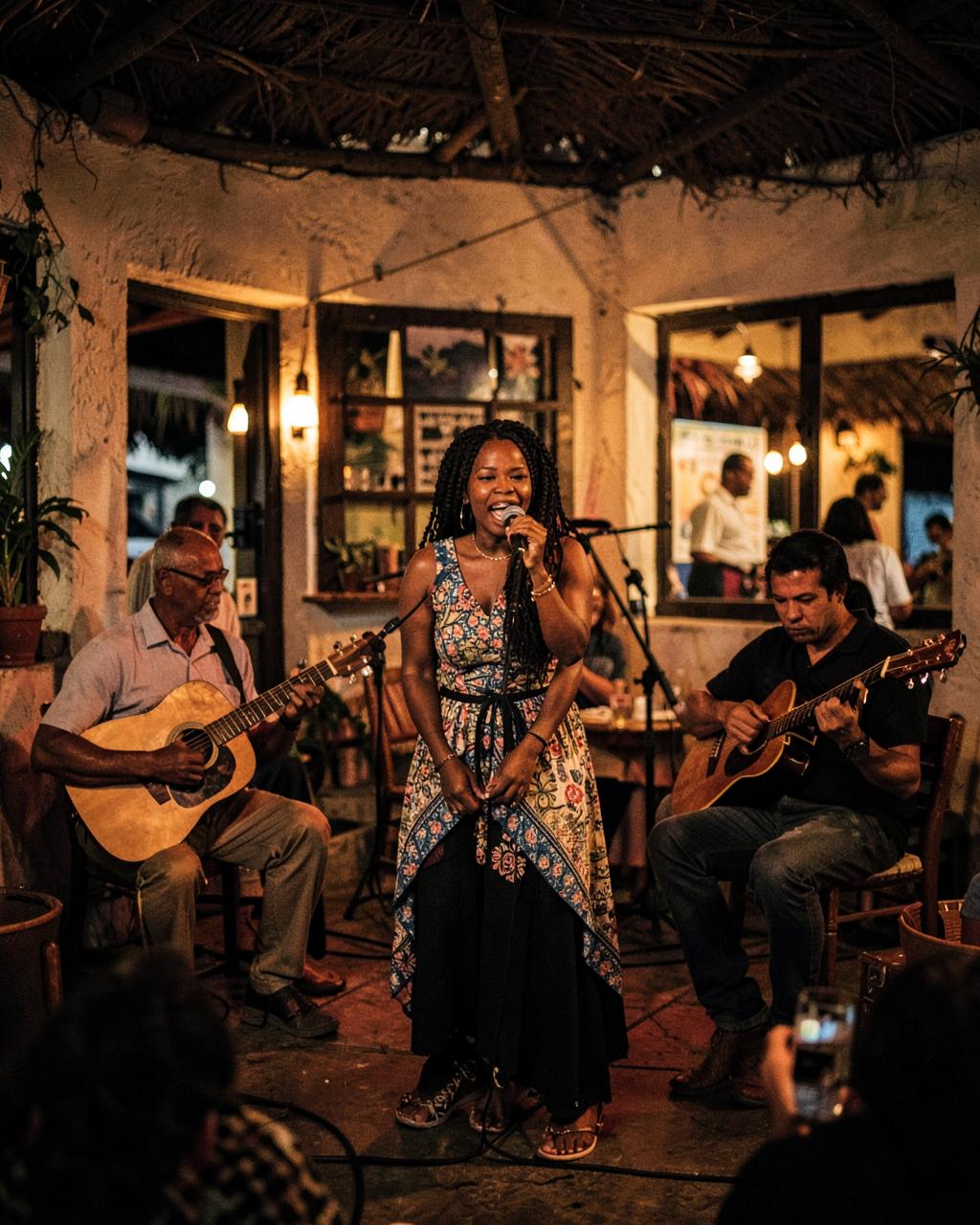
Morna is played on guitar, violin, cavaquinho and piano, at a slow tempo, and sung in Kriolu. Its recurring subject is separation: emigration, the sea between islands, love that is far away, and sodadi — the longing to return.
That subject is not sentimental in Cabo Verde. The islands have sent people abroad for generations, to Portugal, the United States, Senegal and the Netherlands, and almost every family has someone who left.
Where it comes from
Morna developed on the islands from the nineteenth century, drawing on European, Cabo Verdean and West African elements. Boa Vista is often named as its early home, and São Vicente as the place where the modern form matured.
The poet and composer Eugénio Tavares and the composer B. Léza are central to its written repertoire, and the singer Cesária Évora carried it to audiences worldwide.
How it is learned
Morna is learned by playing in company — at home, at gatherings, in the bars and back rooms of Mindelo — rather than in classrooms. Lyrics matter as much as melody; a good morna is judged on its words.
Why it is protected
Morna was inscribed on the UNESCO Representative List of the Intangible Cultural Heritage of Humanity in 2019 as the musical practice of Cabo Verde.
Editorial note
Editorial note: this record is written from public heritage documentation rather than from a single recorded interview. Practices, meanings and names vary between communities, so descriptions here are held as one telling among many. Knowledge holders from this community are invited to correct, expand or replace this entry.
Cultural Context
A living popular tradition; individual songs remain the property of their composers.
Contributor: Her African Culture editorial team, from UNESCO documentation.
Associated place: São Vicente, Cabo Verde
Language: Kriolu (Cabo Verdean Creole), Portuguese · Consent: Granted · Verification: Human verified