Music · Guinea · 5 min read
The Sosso-Bala of Niagassola
Story · 5 min read
Spoken reading of this record. Original community recordings are released only with the knowledge holders' consent.
The Story
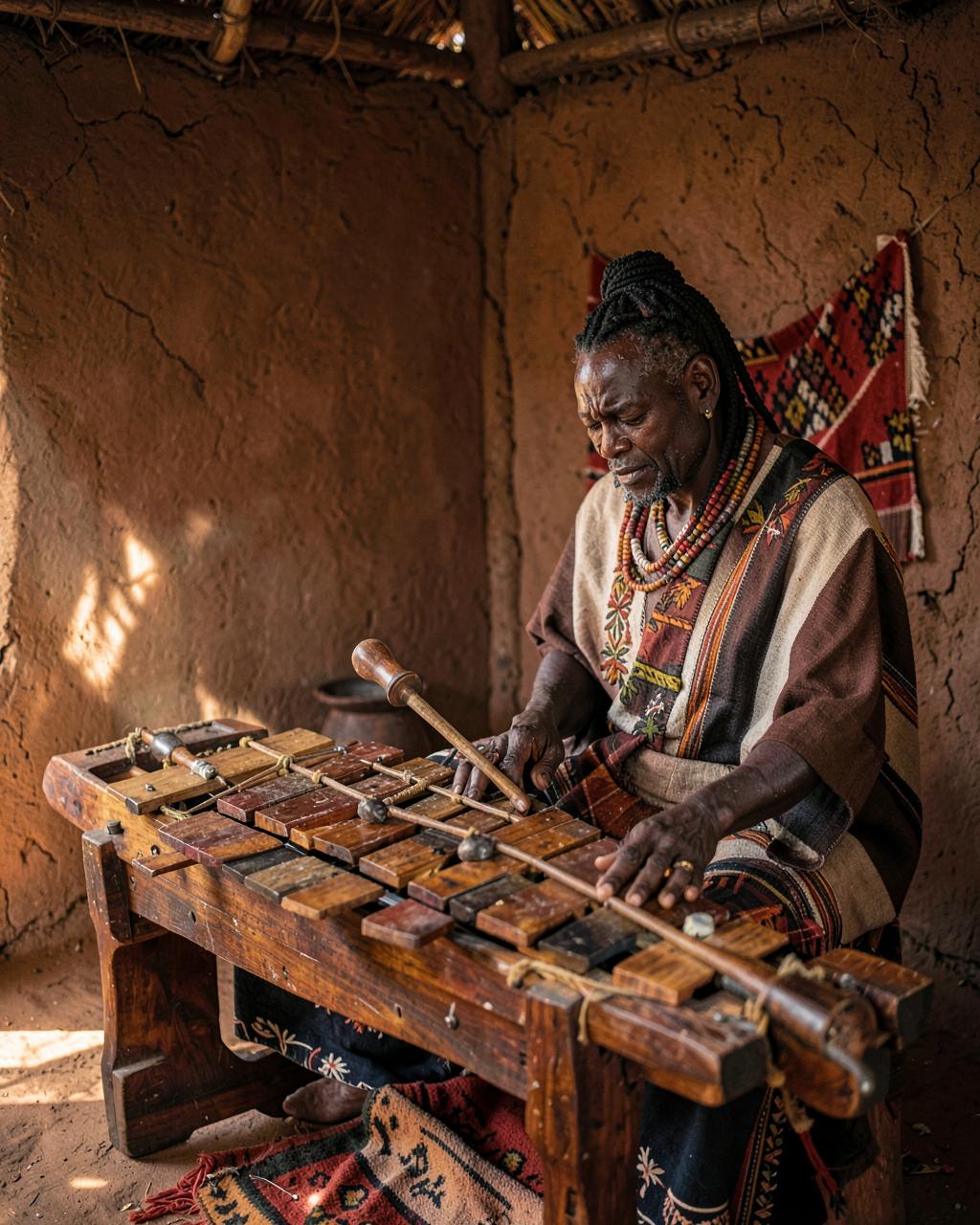
In the village of Niagassola in Upper Guinea there is an instrument that is not for sale, not for tour and not for daily play. It is a balafon — a wooden xylophone with gourd resonators — known as the Sosso-Bala.
Malinké oral tradition connects it to the thirteenth century and to the founding of the Mali Empire, and to the balafon taken from the Sosso ruler Sumaoro Kanté. Whether or not every detail can be dated, the tradition around the instrument has been maintained without interruption by one family.
The guardian
The instrument is kept by the Dökala family, and the head of that family holds the title Bala Tigui, the master of the balafon. The role passes within the lineage. The Bala Tigui is responsible for the instrument's protection, its ritual handling and the repertoire attached to it.
The Sosso-Bala is played only on specific occasions — certain festivals, ceremonies and moments of national significance. Photographing or handling it is restricted.
The repertoire
The music associated with the instrument is inseparable from the jeli tradition of praise, history and genealogy. To play it is to recite; the pieces belong to particular families and events.
Why it is protected
The cultural space of the Sosso-Bala was proclaimed a Masterpiece of the Oral and Intangible Heritage of Humanity in 2001 and inscribed on the UNESCO Representative List in 2008.
Editorial note
Editorial note: this record is written from public heritage documentation rather than from a single recorded interview. Practices, meanings and names vary between communities, so descriptions here are held as one telling among many. Knowledge holders from this community are invited to correct, expand or replace this entry.
Cultural Context
Access to the instrument is restricted by its guardian family. No images of the instrument are published here.
Contributor: Her African Culture editorial team, from UNESCO documentation.
Associated place: Niagassola, Guinea
Language: Malinké, French · Consent: Granted · Verification: Human verified